

If I am being honest, I could write an essay on every single paragraph from Peter Weiss’ The Aesthetics of Resistance. Here’s a particular one I would like to talk about:
“All art, all literature are present inside ourselves, under the aegis of the only deity we can believe in, Mnemosyne. She, the mother of the arts, is named Memory. She protects what our own knowledge contains in all achievements. She whispers to us, telling us what we yearn for. Any man who presumes to cultivate, to castigate these stored assets is attacking us ourselves and condemning our powers of discernment.”
By invoking Mnemosyne (the Greek goddess of memory and mother of the nine Muses), Weiss is making a political statement about who owns culture.
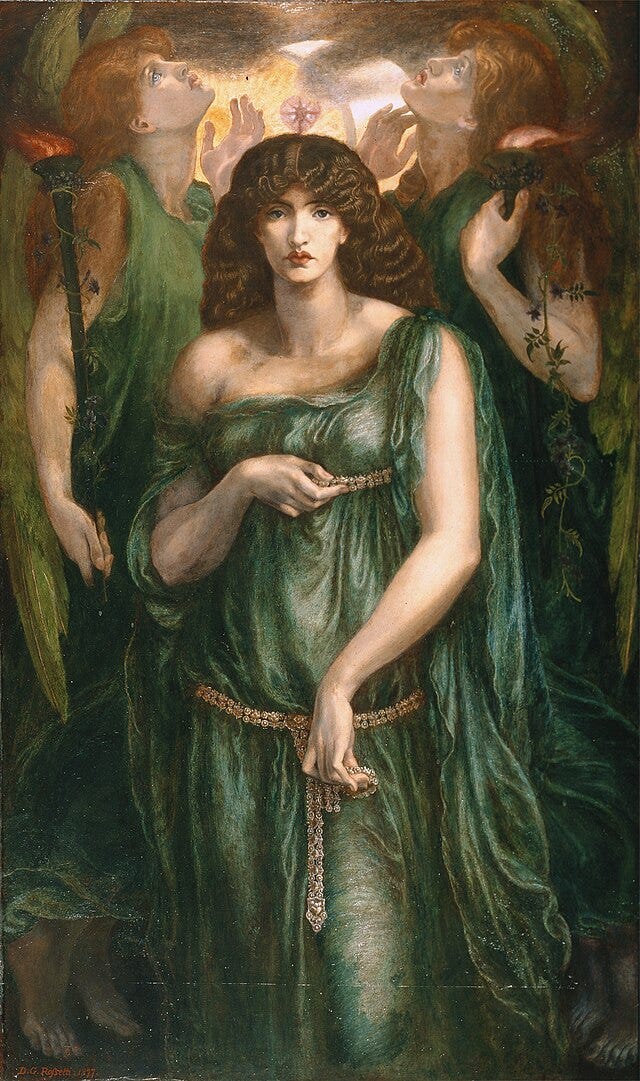
I love the phrase “under the aegis”. Aegis is protection, divine authority, the shield of Zeus himself. He is saying that our relationship to art and literature operates under this divine protection, that our internal access to culture is sacred and inviolable. It’s about the way Cervantes, Dostoyevsky, Woolf, Van Gogh, Proust all live inside us, shape our consciousness, become part of our mental architecture.
Weiss targets the cultural gatekeepers, the critics, the curators and professors who would tell us what art means, how to interpret it, which works matter and which do not. When someone else presumes to “cultivate” our relationship to culture, to tend like a garden according to their design, they are committing a kind of violence against our consciousness itself.
He argues that culture is democratically distributed, it lives in the interior lives of ordinary people. The working-class protagonists from his book do not need permission to engage with Géricault’s The Raft of the Medusa or Kafka’s stories. They carry these works within themselves, and Mnemosyne herself authorizes their interpretations.
Who gets to speak today? Whose interpretation counts? What canon deserves preservation? Rather than fighting over who controls cultural institutions, we should realize that the real work of culture happens in the vast, ungovernable space of individual memory and collective dreaming. Mnemosyne does not take sides in culture wars because she has already won: she lives in all of us, whispering what we need to hear.