
Living the Day Twice
On About Time, Lost Time, and What Richard Curtis Understood About Fathers

Those who know me or follow this Substack will know that I have a recurring preoccupation with time. Proust is never far from my thinking, and neither is the particular anxiety of lost time, of days that passed without being fully inhabited, of the retrospective recognition that you were somewhere without quite being there. It’s an anxiety I have written about in different registers across several essays now, and I suspect I will keep writing about it because it has not finished with me yet. Today, I want to approach it from a different direction: a romantic comedy from 2013 that I first watched in 2015 and have returned to several times since, each time finding that it has grown in the intervening years, or I have, which amounts to the same thing.
About Time, written and directed by Richard Curtis, is categorized as a rom-com, which is accurate in the way that describing Proust as a novel about memory is accurate: technically correct and almost entirely insufficient. The premise is familiar enough: Tim, a young Englishman, discovers on his twenty-first birthday that the men in his family can travel back in time, returning to any moment in their own lives and living it again. He uses this ability, as any reasonable young man would, to improve his romantic prospects. He meets Mary, played by Rachel McAdams with the kind of warm specificity that makes even minor choices feel inhabited, and the love story proceeds with all the tenderness and occasional farce that Curtis does better than almost anyone working in commercial cinema.
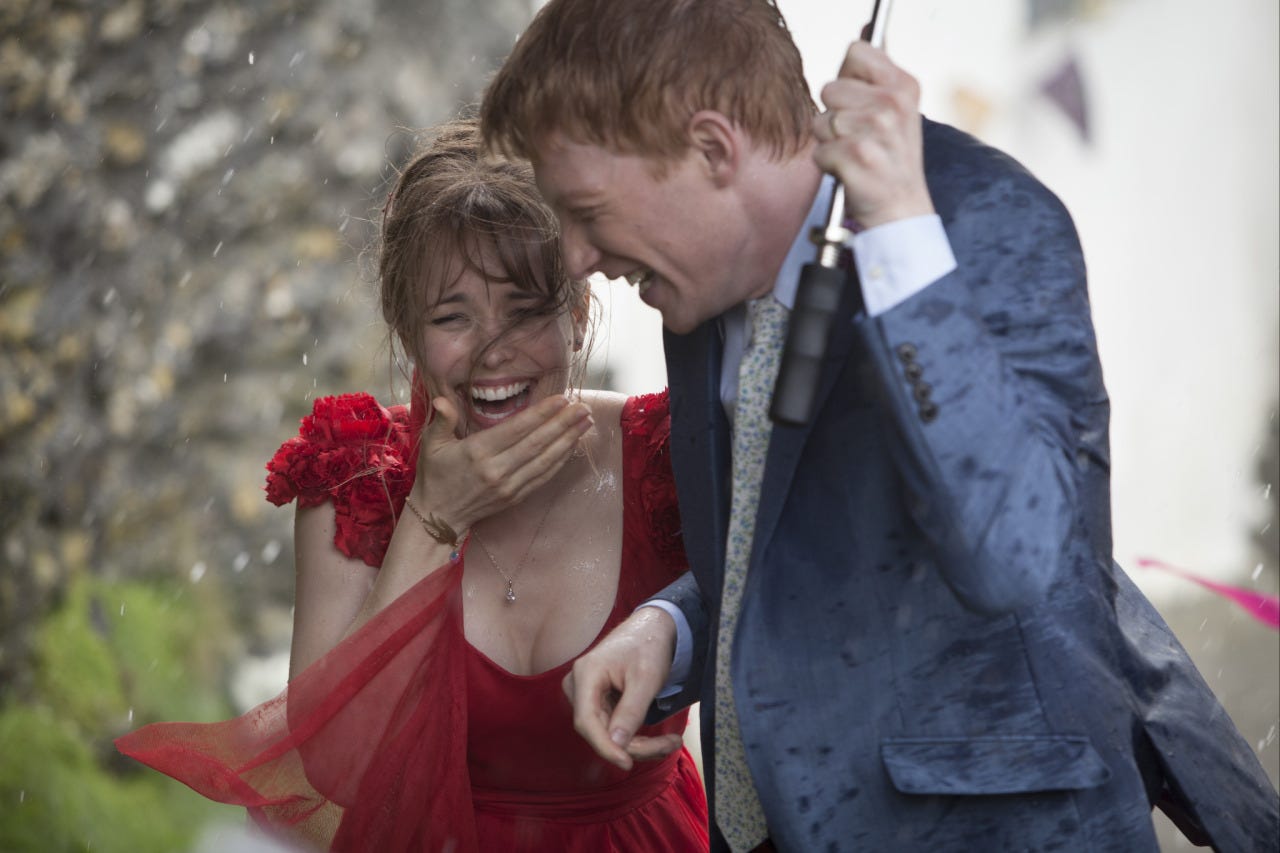
But I would argue, the love story is not what the film is actually about. Or rather, it is the vehicle through which the film arrives at something considerably more serious, which it then delivers with such lightness that you are halfway through grieving before you realize you have been ambushed.
What Curtis understands, and what most writers in any genre fail to understand, is that endearment is not a function of screen time. Almost every character in About Time, including those who appear for thirty seconds, carries a complete interior life that you somehow intuit without being shown it directly. The eccentric playwright, the quietly devastated sister whose storyline runs alongside the central romance like a shadow it refuses to acknowledge, the mother pottering at the edges of scenes with a cheerfulness that only retrospectively reveals itself as a chosen response to things she has had to accept. Curtis writes peripheral characters the way Chekhov wrote peripheral characters: as though the story is also theirs and the camera simply happened to point elsewhere.
But it is the father who breaks you. Bill Nighy plays him with a restraint so precise it constitutes a kind of acting philosophy, a man of enormous warmth and quiet wisdom who has spent his life doing exactly what the film eventually teaches Tim to do: paying attention. His relationship with his son is not dramatized through conflict or the conventional apparatus of father-son narrative. It is dramatized through presence, through the specific texture of two people who genuinely enjoy each other’s company and know, somewhere beneath the daily pleasantness of it, that this will not go on forever.
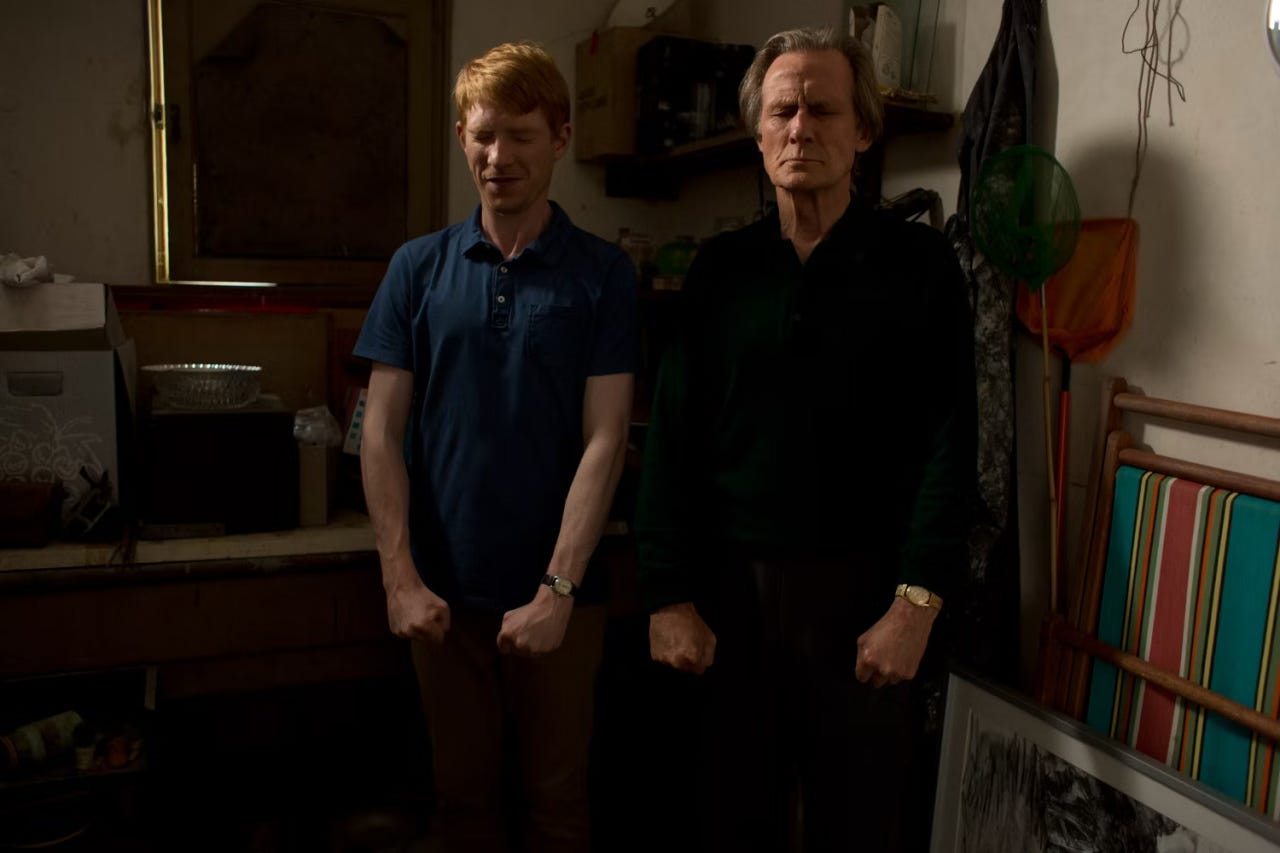
When Tim makes his final journey back, returning not to fix anything or change anything but simply to stand one more time in an ordinary afternoon with his father, to walk across a beach in the grey English light doing nothing of consequence, I was not prepared for what it did to me. I watched it for the first time in 2015 when I was twenty, and I felt it as something poignant but still somewhat abstract, the way you feel things that you know will matter more later. When I returned to it in more mature phases of my life, it had become something else entirely.
I will not be coy about this: it changed something in my relationship with my own father. Not dramatically, not through any single conversation or declared resolution, but in the quieter and more durable way that a shift in perception changes things. I began to notice the ordinary afternoons more. The phone calls that were really just check-ins, the comfortable silences, the repeated stories I had heard enough times to recite myself. The film had instilled in me what Tim’s father tries to articulate in words but really communicates through the way he moves through his days: the idea that the extraordinary is almost never where you think it is, that it is usually hiding inside the ordinary, waiting to be noticed by someone paying sufficient attention.
This is, of course, a Proustian idea. It is the central idea of In Search of Lost Time: that experience contains more than we extract from it in the moment, that the past holds riches we failed to collect when we were living it, that consciousness applied retroactively to time already spent reveals dimensions that were always there and always missed. Proust’s solution is involuntary memory, the madeleine, the sudden ambush of the past arriving unbidden with its full sensory weight. Curtis offers something warmer: the decision, made daily and deliberately, to live each moment as though you are already living it for the second time. To bring to ordinary Monday afternoons the quality of attention you would bring if you knew you were returning to them.

The film’s closing monologue, in which Tim describes this practice, is so quietly radical that it tends to pass as sentiment. It is rather a phenomenological proposal: that the texture of your experience is not fixed by the events that constitute it but by the degree of attention you bring to it. That a life fully inhabited is available to everyone and requires no time travel whatsoever. Just the decision, renewed each morning, to notice.
I took that message to heart. I found it again on each rewatch, always slightly richer, always landing somewhere different depending on where I was in my own life and what I had in the intervening years learned about time and fathers and the specific weight of ordinary afternoons. That is what the best films do: they do not deliver their meaning all at once. They give you what you are ready for, and they wait, patiently, for you to come back for the rest.
Really liked this read, Aatish. Having discovered this film only recently, it made go back to all the moments I did and didn't savour with my father. "...the texture of your experience is not fixed by the events that constitute it but by the degree of attention you bring to it." - this has to be the favourite line of this read.