

Yesterday I watched Hamnet. The contemporary treatment of grief felt entirely misplaced, leaving me with a rather dull impression of the film. The tonal ambitions ultimately undermine each other, flattening what might have been genuinely affecting.
Fortunately, a few beautifully crafted motifs stand out, and it’s hard to deny the beauty of its conclusion. And what a conclusion it was. I’ve long been fascinated by how common folk must have reacted to one of the greatest storytellers of all time, and I yearn to see Shakespearean settings come to life on screen. The final act delivered exactly this: the profound democracy of stories, how they affect us all regardless of class or gender. When Jessie Buckley’s Agnes sees that she is not alone in her grief, that a story can reach across and hold the people who witness it, the effect is magnificent. This last act is what salvaged the film for me.
Max Richter’s “On the Nature of Daylight” continues to torment me in a hauntingly beautiful way, as it has over the years. And Jessie Buckley, the woman that you are! She carried the entire film with her performance.
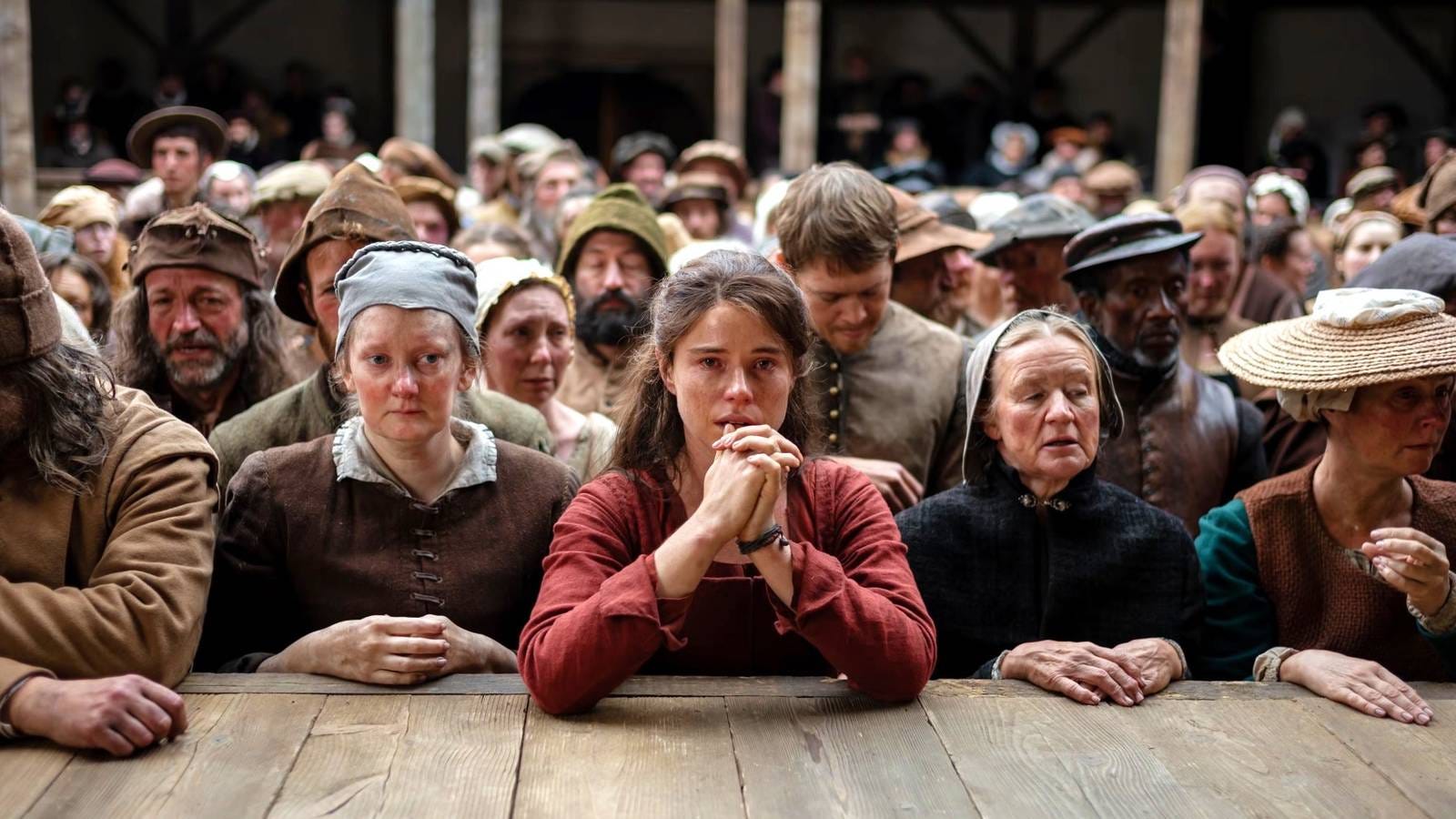
The film is adapted from Maggie O'Farrell's novel, and I believe this piece of literature matters deeply. Scholars, academics, and historians have treated Agnes (Anne) Hathaway rather horribly over the centuries: she was a peasant, Shakespeare hated her, he fled to London to escape her. Yet there is no evidence for any of this. There is, in fact, evidence that he loved her. A lot. I admire this aspect of the work most of all. Filling the historical gap, restoring dignity to a woman long maligned, and recognizing the quiet urgency of telling her story.
My letterboxd