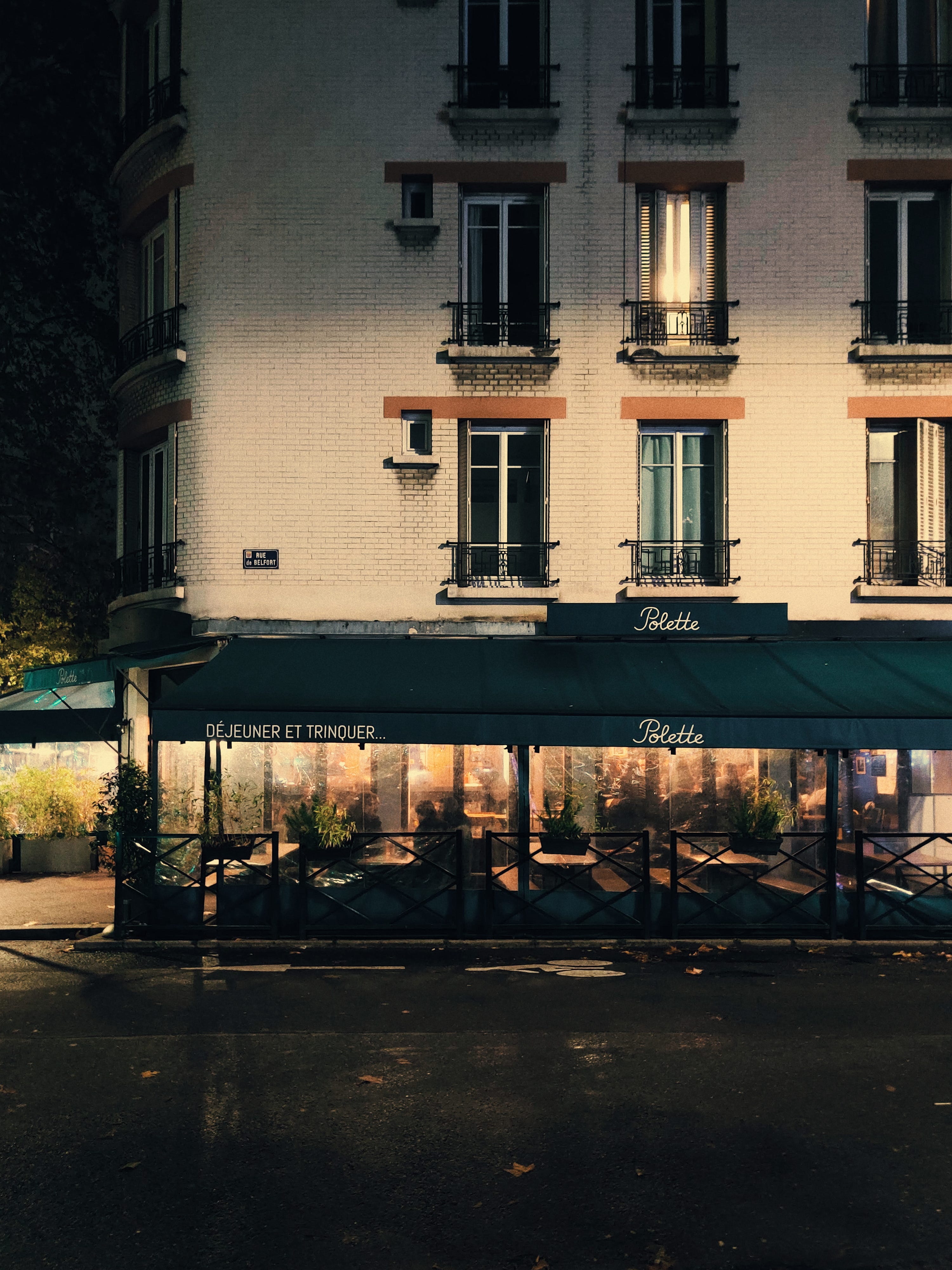
Café Polette
What I see from my window

I live in an old apartment on the border of the 17th arrondissement of Paris. Below my window sits Café Polette. From up here, I watch gestures: how a man’s shoulders drop after his first sip of coffee, as if the weight of morning had been dissolved. A young mother’s face softens as she watches her child wobble between chairs. A couple arrives separately, sits in studied silence, then leaves in opposite directions. Every gesture is a question, every glance an answer. When you watch people carefully, you see that we’re all speaking with our bodies. The nervous adjustment of a scarf says what words won’t. The way a hand hovers over a croissant before breaking it reveals an entire philosophy of pleasure.
The terrace has rhythms. Mornings bring particular coffee rituals. Afternoons belong to solitary readers, people who choose a public space precisely to be alone but witnessed. Evenings transform everything: lovers lean across tables, friends burst into laughter that rises to my window, birthday songs erupt in chaotic harmony. Winter has arrived now. The terrace empties faster. Scarves wind tighter, hands cup warm glasses with devotion. The light changes earlier, and the café’s yellow glow spills onto the pavement. People linger less but savor more.
What I’m really watching is the human need to be present somewhere. I collect these observations from my window because this is how I try to understand the grammar of being human: watching how a face changes when someone recognizes a friend, or how posture shifts with a second glass of wine. It does feel like I’m in possession of an extra slice of existence. The bustle, the ordinary details, the seasons changing: all of it spins beneath my window. And I find myself under its spell, grateful for this small theater that requires no ticket, only sustained observation.